Fall and Winter
Midge Patterns
Fall and Winter Midge Patterns
Fall and winter are lean times for many aquatic insects. Many anglers streamer fish, but there are reliable aquatic insect hatches in the fall and winter…midges. Midges are small insects that are widely distributed and extremely diverse. They have three life stages: larva, pupa, and adult. Larvae live on the rocks, usually under them in the sediment, and are largely unavailable to trout. Most anglers fish the pupa and adult stages with a dry or emerger. In this article, I will present surface and subsurface patterns I have found effective on fall and winter trout.
Surface patterns
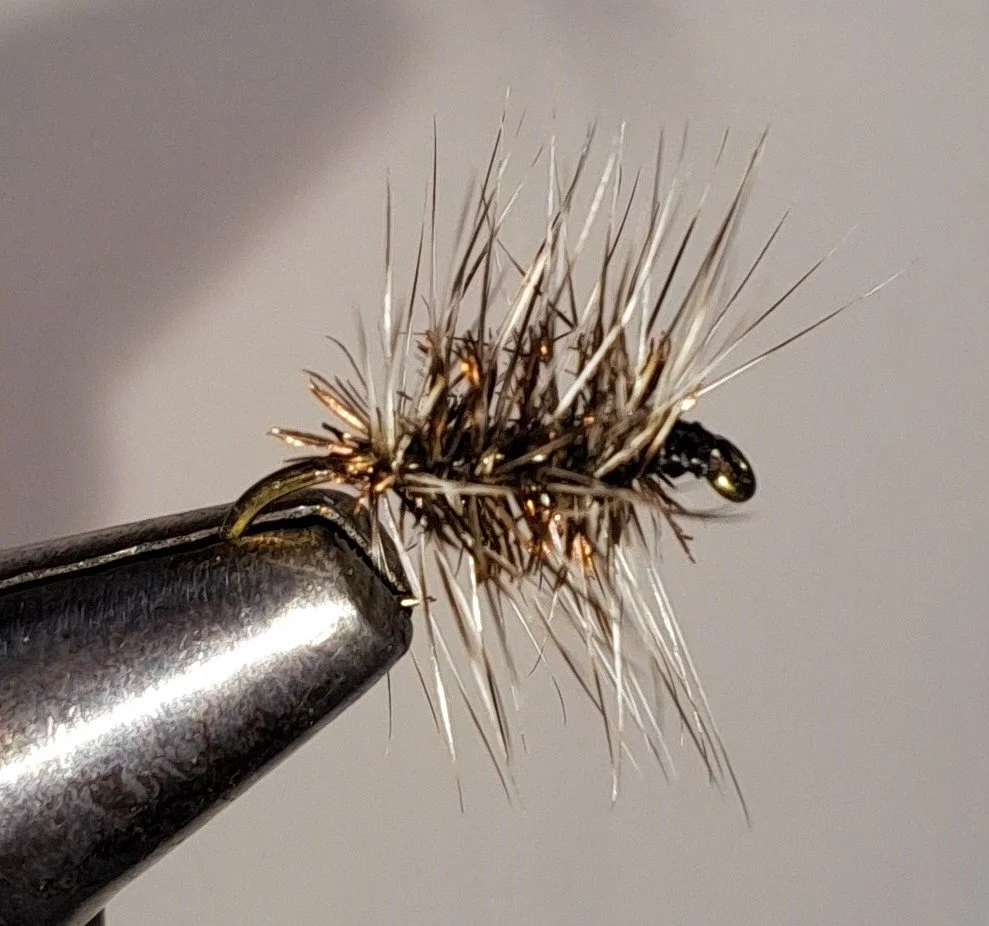
The first surface pattern is the classic Griffen’s Gnat. This pattern has been around for a long time and is a common midge pattern still used today. It represents a midge cluster, or a group of mating midges. The pattern was popularized by George Griffith before 1939, but it is unclear whether he actually invented the fly1.
The Griffen’s Gnat is best in sizes 18-24 in the fall. Fall midges are small, and the patterns should be, too. Additionally, the water is clear, and using a smaller, less visible pattern will reduce refusal rises. The original pattern uses peacock herl and grizzly hackle. This combination works. However, I have experimented with other combinations. A brown rabbit-fur body with bronze grizzly hackle can be effective at times. I have also used a tan body with ginger hackle.
MM Midge
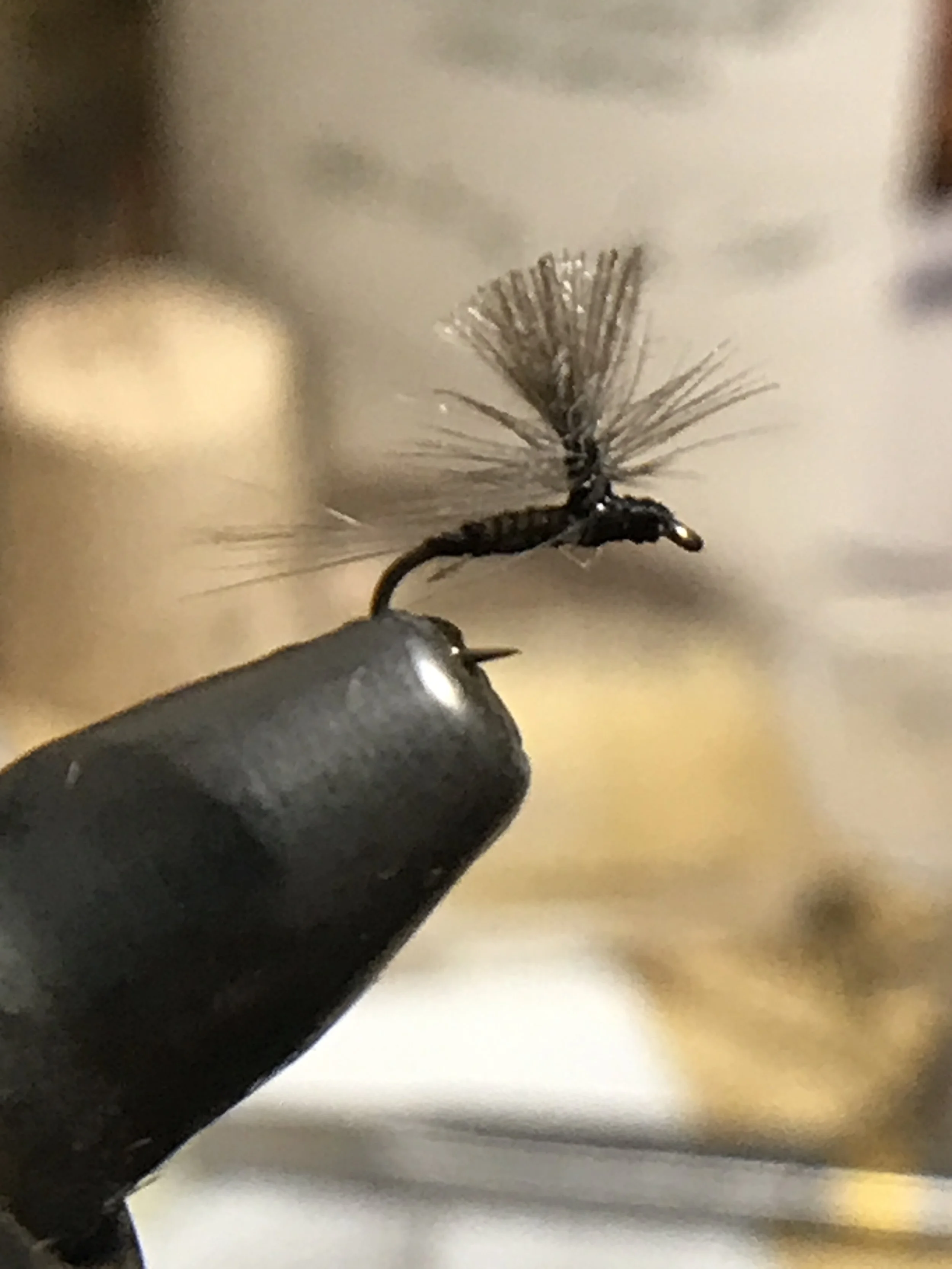
This is my own creation and is based on a moose mane body. The abdomen is made of moose mane, which is hollow and grey. This gives the fly good floatation and a nice natural grey appearance. The pattern is tied in a parachute pattern with a CDC post. The CDC helps with flotation, is easy to trim, and seems to work better than poly yarn. The grey is contrasted with a black thorax made of black thread. The post is wrapped with 3 turns of medium dun hackle.
Pat’s Emerger
This is another pattern I created. It works off the concept of the MM Midge but is tied on a curved emerger hook. The post is tied down so it rides flush in the film. A short post represents a budding wing and provides a visual marker.
Fishing Surface Patterns
When fishing small midge patterns on the surface, there are a few key changes in your techniques and tackle. First, you need an excellent natural drift. Use 6x or 7x tippet on a long leader system of 12 feet or more. Use aerial mends when needed to negate disruptive currents. Second, accuracy is critical. The fly is small, and you need to put the fly in the Snell’s window for the trout to see it. Try to close the distance to 25’ and land the fly 2 to 4 ft upstream of the trout. If you overshoot the trout, you can slide the fly back into the proper drift line. But you need to do this quickly before the fly comes into view. Also, don’t do this on every cast; you will water log the fly. Finally, when fishing small flies on the surface, reduce the hookset force. It is easy to pull a small fly out. The hook bends are small and only go in a few millimeters. To prevent this, use a slip set. Once the trout eats the fly, slowly begin raising the rod on a 1-2-3 count. Take your finger off the fly line on the handle. Once you reach 3, tension the line with a flick of the wrist. Once you hook the trout, you should hear line coming off the reel. If you don’t, your drag is too tight. This will provide the ideal set force for small flies on the surface.
Subsurface Patterns
Sometimes the trout are feeding below the surface on midges. This can be pupae anywhere from the bottom to just below the surface. There are a few patterns that will cover the full spectrum of the water column. Zebra midges, Thorax patterns, and small wets can be fished at various depths.
Zebra Midge
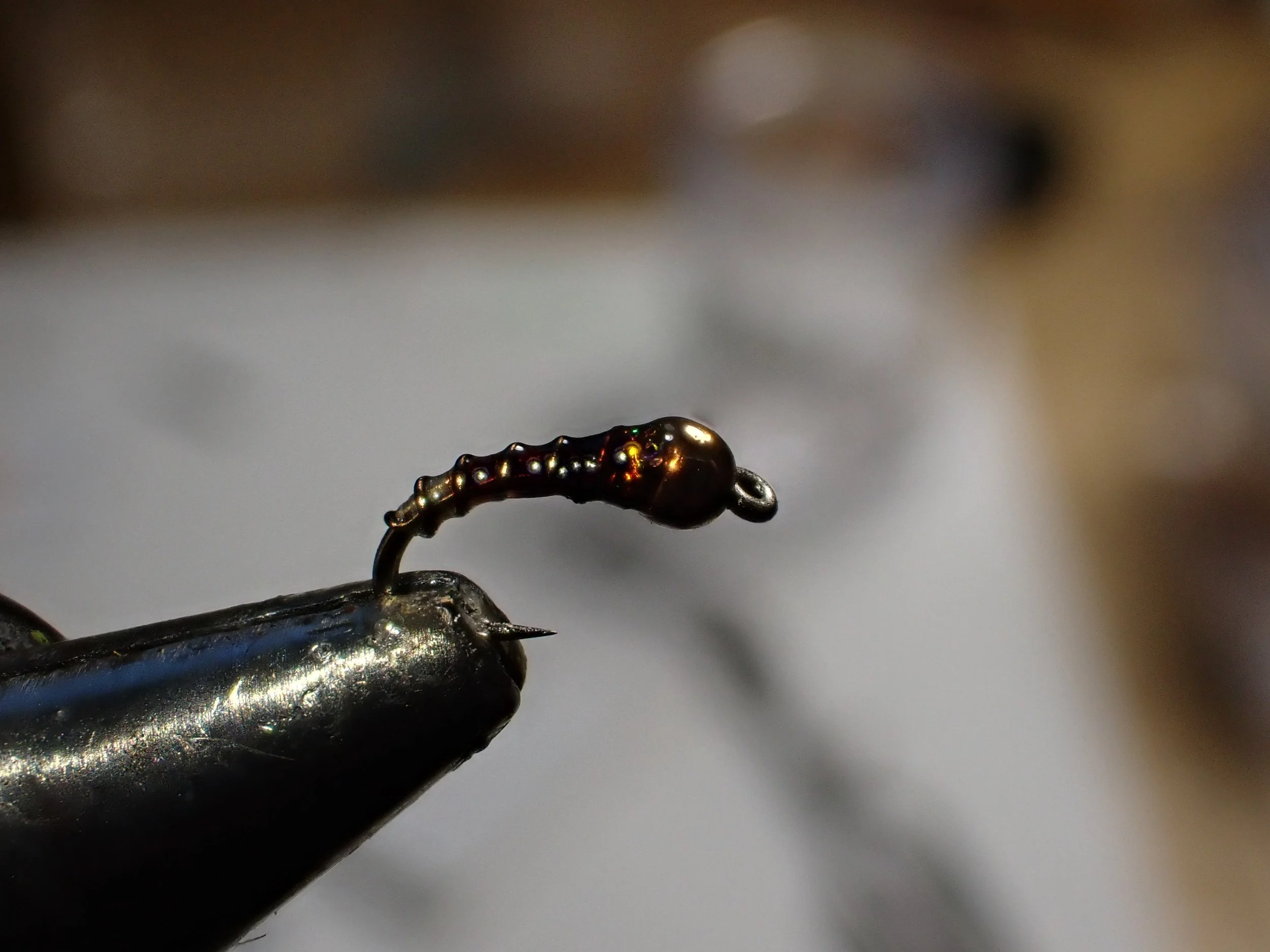
This classic pattern is a staple with most midge anglers. It is tied on a curved hook with a small bead, thread body, and wire ribbing. The most common pattern variation is the black Zebra Midge. You can find this black thread midge pattern in most fly boxes. But there are others. What makes this pattern so versatile is the bead head. It not only helps imitate the pupa, but also provides weight to sink the fly. It can be tied with glass beads, brass, or tungsten to reach various depths.
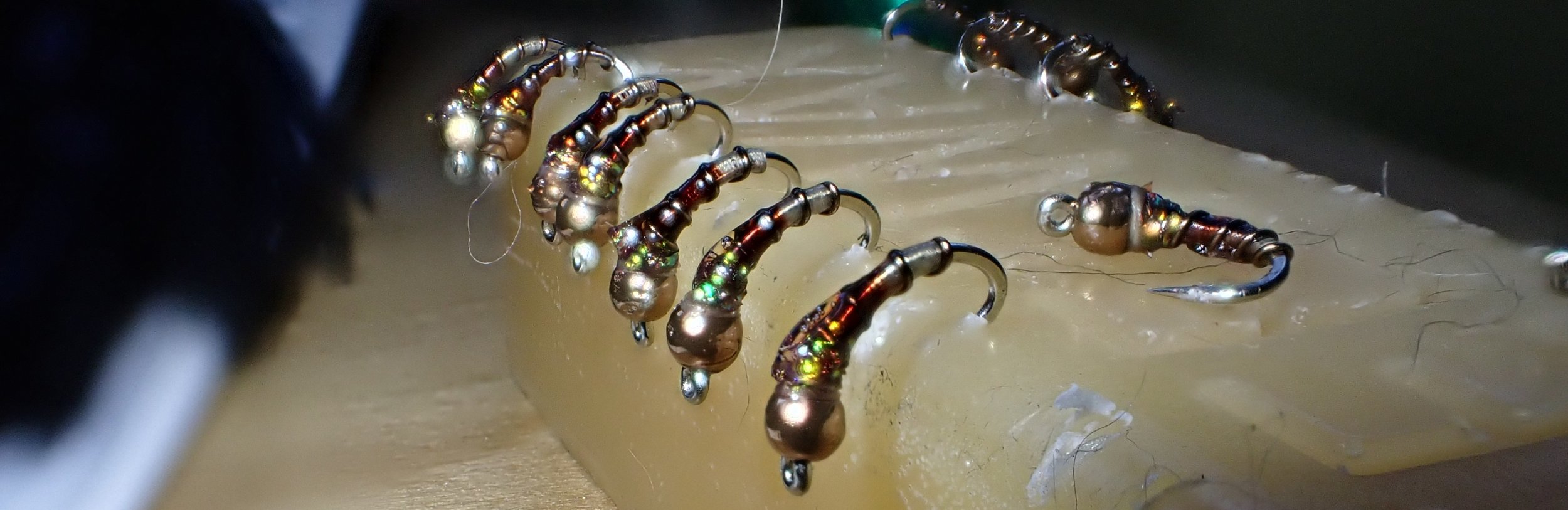
Brown (Natural) Zebra Midge
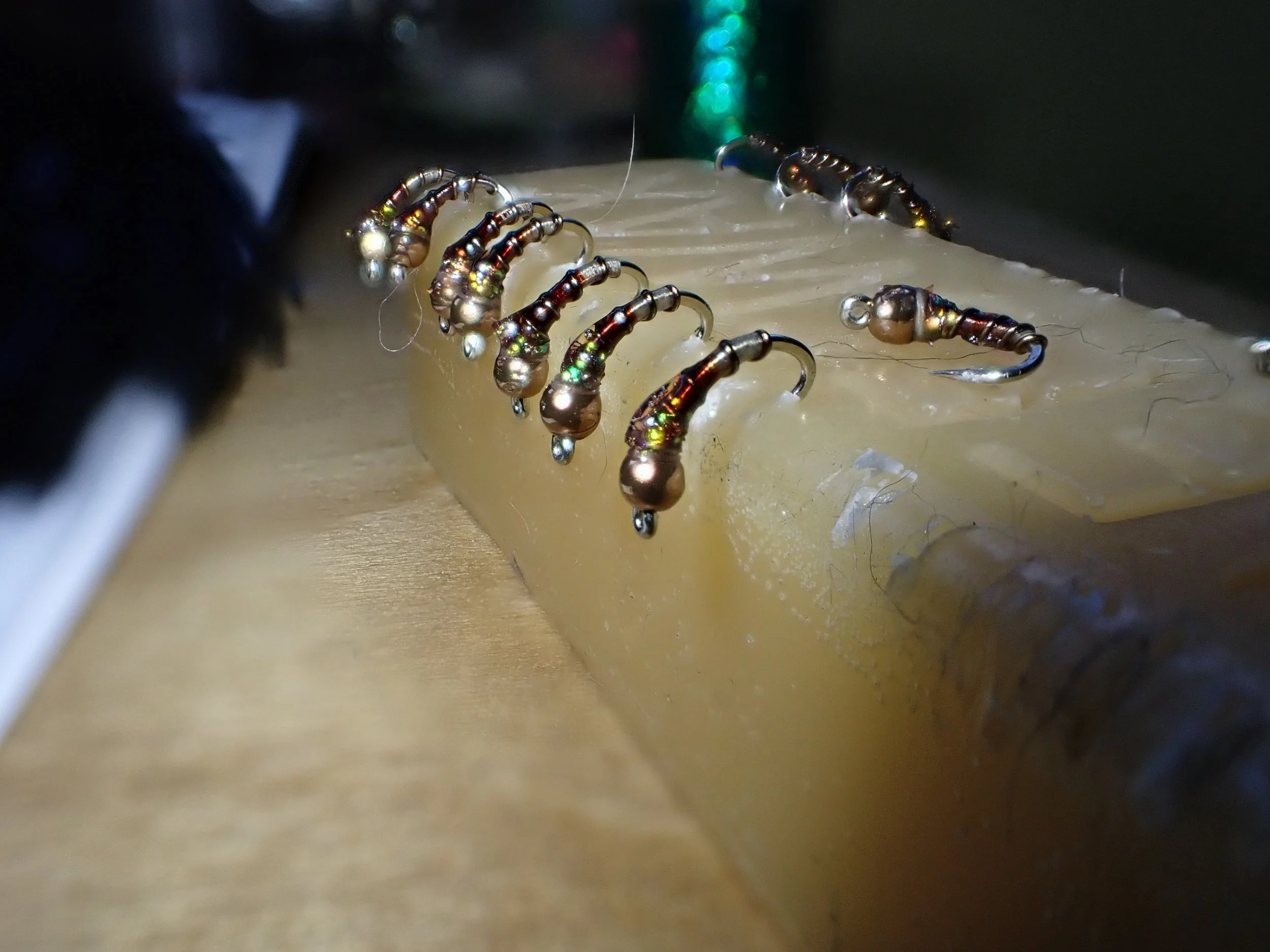
There are many brown midges in the fall. This pattern is slightly different than your traditional zebra midge. It is tied with 50 denier GPS white thread or Danville fly master in Lt Cahill, 1 mm brown wire, and a brown metallic bead. Once you tie the body, use a brown Sharpie marker to draw a line down the fly's back. The wire is then wrapped. The thorax is constructed of twisted root beer midge flash and wrapped around the hook. Once done, coat the fly with Hansens Hard as Nails clear nail polish. The solvent causes the brown marker to bleed into the fly's belly, producing a unique pattern. I usually use two coats. The pattern has a translucent look with just a touch of flash in the thorax.
Grey Zebra Midge
Grey is another color variation common in the fall and winter. I use a silver bead and black wire with grey thread. For the thorax, I will add either blue or white midge crystal flash by creating two wing buds. I use the blue on bright blue days. I use the white on overcast days. You can vary the sink rate by using a glass bead instead of a tungsten. This is beneficial in shallow water.
Thorax Midges
Thorax midges have many variations; however, they all have a dubbing thorax. I prefer a rabbit blend for the fine fiber, and once wet, the neutral buoyancy. Most tiers will add some flash to the fur dubbing. The common choice is cutting ¼” sections of Antron yarn and blending it with the fur. Keep the dubbing minimal.
Fishing Subsurface Patterns
Fish will eat midge pupae anywhere from the bottom to just below the surface. Fishing deep typically uses a two-fly rig with an indicator. Either a standard rig or a drop shot rig will work. The trick is to get the patterns at the same level as the trout. This is easier in slow, clear water. If you can see the depth of the fish, adjust the indicator accordingly. However, in fast water, the depth is unknown, and your flies may not be getting as low as you think because of the current. I typically use a drop shot and add more weight than you think. Work down towards the bottom by adding weight and raising the indicator. At some point, you will start ticking rocks.
Sometimes the trout are suspended mid-depth. If the water is deep, you can use an indicator rig to match the trout's depth. I usually use two zebra midge patterns. However, a zebra midge and a thorax midge pattern are a good combination. I have also used a zebra midge with a small wet fly combination. The zebra midges get down faster, especially if you use tungsten beads. In slow water, you may not need to add weight with a zebra midge. However, if you do, use a small amount of tungsten putty or a #8 split shot.
Trout will suspend at various depths, not just midway. I have seen them just below the surface. When they are close to the surface, an indicator will spook trout. A dry drop setup will work better. I usually set up a rig with a sliding dry fly. I start with a 5x leader. I will tie on a short section of 6x, maybe 12 to 18” long. I will add a midge pupa pattern to the 6x. This will be either a zebra midge in faster water, a thorax midge in slower water, or a small wet fly in either water type. I will add the dry above the knot with a tag tied on with a Uni-knot. The dry fly can be slid up the leader, allowing the dropper to go deeper. Or down to fish shallow. I have at times put the dropper just 6” below the surface. For the dry, I usually begin with a Griffin’s Gnat. I also use a MM Midge if there is a mix of surface and subsurface feeding.
The key to successful midge fishing near the surface is casting. The cast must be accurate, the leader laid out fully, and the fly land softly. The long 12-foot leaders compound this difficulty. Practice casting using long leaders and learn to control the casting arc to throw tight loops.
Midge fishing is challenging but rewarding. Trout are eating midges more often than anglers think, and learning to fish midges will expand your fishing opportunities. Learning to cast long leaders and fish with small flies will improve your fishing in all aspects of fly angling. Midge angling builds control and precision that carries over to every aspect of your angling skill.
Learn more at Weaverflyfishing.net.